
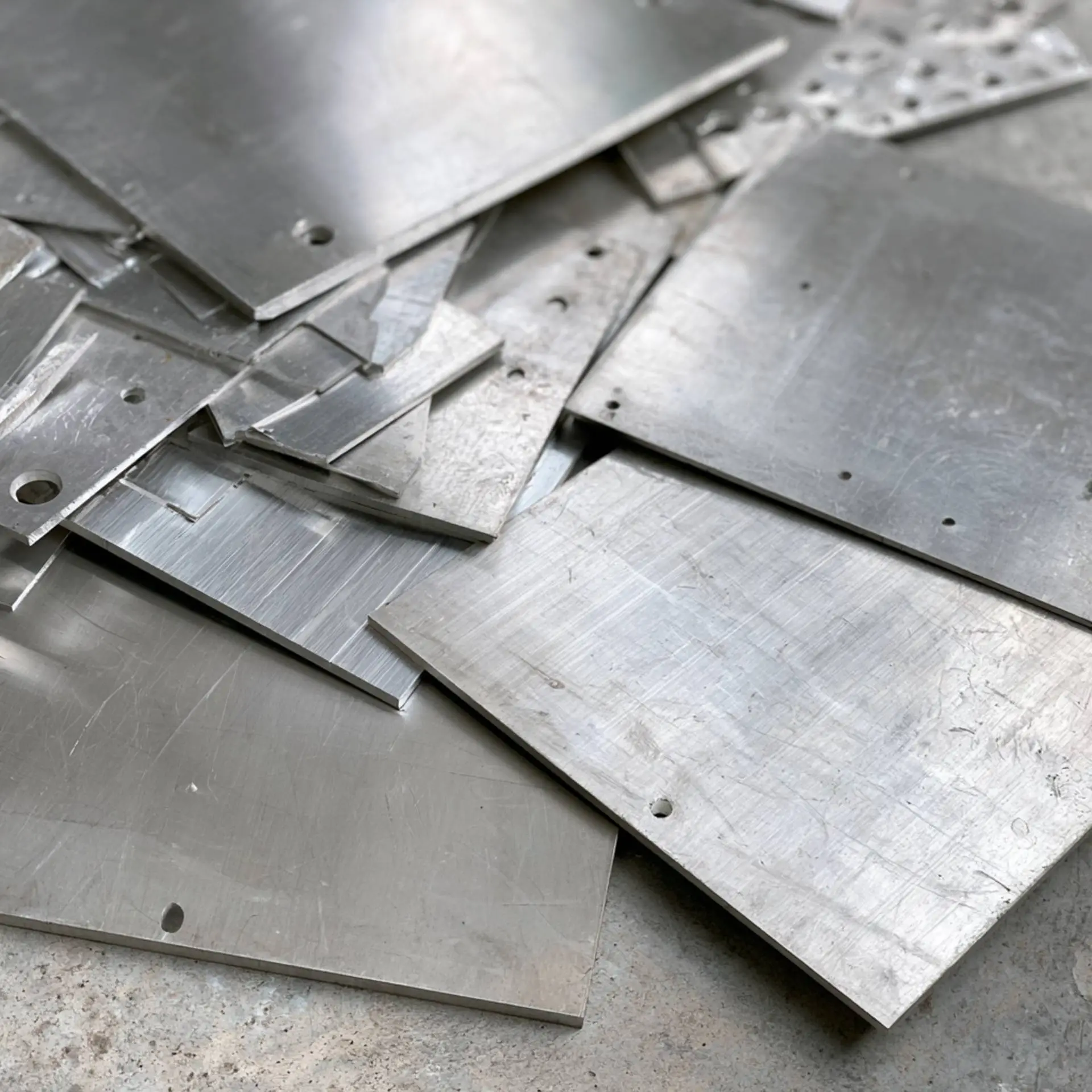
Choosing between 5083 and 6082 aluminium depends on the finished component, not on which alloy is universally “better”.
For most fabrication projects, engineers choose 5083 for extensive welding and marine or corrosive environments, while they often select 6082-T6 for higher proof strength, CNC machining and structural or extruded components.
Engineers and buyers should also consider temper, product form, thickness, joining method, tolerances, surface finish, operating environment and applicable standards before specifying either alloy.
What Is the Difference Between 5083 and 6082 Aluminium?
5083 aluminium is a 5xxx-series aluminium-magnesium alloy. It is non-heat-treatable, so its mechanical properties are developed mainly through strain hardening. It combines excellent strength with very high weldability and strong corrosion resistance, particularly in marine environments.
6082 aluminium is a 6xxx-series aluminium-magnesium-silicon alloy containing manganese. Manufacturers commonly specify it in the T6 condition to achieve higher proof strength and excellent machinability. Engineers widely use it for structural parts, machined components and extruded sections.
| Property | 5083 Aluminium | 6082 Aluminium |
| Alloy family | 5xxx, aluminium-magnesium | 6xxx, aluminium-magnesium-silicon |
| Heat treatment | Non-heat-treatable | Heat-treatable |
| Strength characteristic | High strength for a non-heat-treatable alloy | Higher proof strength in commonly used T6 condition |
| Corrosion resistance | Particularly strong in marine environments | Good across many structural and industrial environments |
| Weldability | Very good | Good, but welding can soften the heat-affected zone |
| Machinability | Fair to good, depending on temper | Generally good in T6-type conditions |
| Common forms | Sheet, plate and fabricated sections | Plate, bar, tube and extruded profiles |
| Typical uses | Marine fabrication, welded tanks and vehicle structures | Frames, machined parts, trusses, profiles and transport components |
The two alloys have broadly similar densities, so weight is rarely the deciding factor. Alloy and temper affect electrical and thermal conductivity, but engineers usually choose both grades for their other performance properties rather than for electrical conductivity.
Where conductivity is critical, engineers should check grade-specific material data rather than assume all aluminium alloys perform alike.
Which Aluminium Alloy Is Better for Welding?
Why Is 5083 Often Preferred for Welded Fabrication?
5083 is widely used where welding forms a major part of the manufacturing route.
Its non-heat-treatable metallurgy means it does not depend on a precipitation-hardened T6 condition for its strength, and welded joints can retain useful mechanical performance.
This makes 5083 a practical option for marine structures, tanks, vehicle bodies and other fabricated assemblies where corrosion resistance and extensive welding matter.
What Should Designers Consider When Welding 6082-T6?
6082 can be welded successfully, but heat from welding can reduce strength in the heat-affected zone.
For highly loaded components, designers should therefore consider properties in the welded condition rather than applying parent-material values across the complete joint.
Welding procedure, filler selection, joint design, section thickness and any post-weld treatment should form part of the engineering specification.
Which Alloy Is Better for CNC Machining and Precision Components?
For machining-intensive work, 6082-T6 aluminium is often the more practical choice. Manufacturers commonly use it for CNC milling, drilling, turning and other precision machining operations because it offers excellent machinability.
Engineers also machine 5083 in suitable tempers, but they more commonly choose it when corrosion resistance and welded fabrication matter more than machining efficiency.
For either alloy, tolerance, surface finish, hole position, threads and component geometry can affect the manufacturing route and overall cost.
Technical drawings should identify critical dimensions rather than relying only on a general alloy designation.
Which Has Better Corrosion Resistance: 5083 or 6082?
Both alloys offer useful corrosion resistance, but engineers usually choose 5083 for seawater, coastal exposure and other demanding corrosive environments. Its strong corrosion resistance also makes it a popular choice for marine and shipbuilding applications.
6082 performs well across many structural, transport and industrial environments, but engineers should assess environmental exposure alongside the joining method, surface condition and any coating or finishing requirements.
What Are 5083 and 6082 Aluminium Commonly Used For?
5083 aluminium is commonly considered for:
- Marine structures and shipbuilding
- Welded tanks and fabricated assemblies
- Vehicle and transport bodies
- Some pressure vessel applications
- Components exposed to corrosive environments
6082 aluminium is commonly considered for:
- Structural frameworks
- CNC-machined components
- Trusses and load-bearing sections
- Transport components
- Bars, tubes and extruded profiles
These are typical applications rather than fixed rules. Loads, fatigue, geometry, temperature, welding, corrosion conditions and the governing design standard can change the appropriate material choice.
What Should Engineers and Buyers Specify Before Ordering?
A useful aluminium specification should cover more than the alloy number. Before requesting a quotation, confirm:
- Alloy and temper
- Product form, such as sheet, plate, bar, tube or extrusion
- Dimensions and material thickness
- Dimensional and geometric tolerances
- Machining, drilling, bending, cutting or welding requirements
- Surface finish, plating or coating where applicable
- Quantity and repeat-order requirements
- Relevant drawings, standards and inspection requirements
- Operating loads and environmental conditions where they affect material selection
Custom manufacture may be more appropriate than an off-the-shelf component when a part requires machined features, controlled bends, cut-outs, close tolerances or repeatable finished geometry.
Raw material price alone may not identify the most economical option. Product form, machining time, fabrication, material utilisation and finishing can all affect the total manufactured cost.
ILF Products supplies aluminium alongside UK-based stockholding and manufacturing capabilities, including CNC machining, cutting, bending, punching and finishing.
Providing a drawing or detailed specification at the enquiry stage helps the supplier assess the required alloy, product form and manufacturing route more accurately.
5083 vs 6082 Aluminium: Which Should You Choose?
There is no universal winner in the 5083 vs 6082 aluminium comparison. Select the alloy around the service conditions and manufacturing route.
5083 is often the better starting point for welding-intensive fabrication and marine or corrosive environments.
Engineers often choose 6082-T6 for structural components, machining and extruded forms where higher proof strength is important.
For safety-critical or highly loaded parts, check the final material choice against the relevant design standard, material specification, drawings and operating conditions.
Where structural calculations or weld design apply, consult a suitably qualified engineer or specialist supplier.
ILF Products can support material supply and specification-led manufacturing when aluminium components require further processing.